media 180
Camera movement types
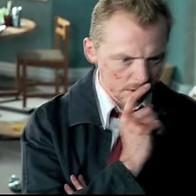


PAN
A pan directs a camera horizontally left or right. The pan camera movement is typically achieved with a tripod head, but can also be done handheld or with a stabiliser. Pans are often motivated by a character’s actions or used to reveal new information to the audience. For example in this pan shot from Shaun of the Dead the camera pans from Ed holding the shovel to reveal Shaun thinking telling the audience that Shaun is making a plan.
TILT
Tilts are very similar to pans except that tilts are vertical, directing a camera upward or downward. Camera tilts can be used to give a character dominance in a shot or to reveal new information to the audience as well as emphasizing the enormity of something in moments of awe and spectacle. For example, in this tilt shot from Fight Club, the camera tilts down to reveal the narrator crying into bob's chest showing the lengths that he will go to prove his lie and giving the scene a sense of comedy.
DOLLY
A dolly zoom is achieved by dollying the camera away from or toward a subject while simultaneously zooming in the other direction. Dolly zooms are an incredibly intentional camera movement because they have such a specific effect. For example in this scene from Bohemian Rhapsody, a dolly shot is used to create a sense of importance and surrealism as we watch Freddy Mercury's final performance. It is also used to highlight the importance of Freddy's character in comparison to the audience and other band members.
ZOOM
A zoom lets you quickly move closer to the subject without physically moving. These can be used to draw attention to a specific character or prop in a scene as well as creating a sense of intimacy between the audience and the characters on screen. For example, in this zoom shot from the Shining, Kubrick uses a zoom to focus he audience on Jack's unnerving facial expression, highlighting his innate evil.
TRACKING
A tracking shot moves the camera alongside what it’s recording, generally following along the horizontal axis as the subject moves. Tracking shots are also helpful for showing a stretch of road or scenery and building a sense of atmosphere. For example in this scene from Moonrise Kingdom, a tracking shot is used to follow the camp leader around the camp showing the different elements of the camp and building an atmosphere as well as demonstrating the different character dynamics by showing how they all interact with each other
PEDESTAL
A pedestal shot involves moving the camera up or down relative to a subject. It’s different from the tilt as the entire camera ascends or descends, rather than just the camera’s angle. A pedestal shot can be used to frame tall or high subject (such as a building) while keeping the framing at eye level. In this example from Alice in Wonderland a pedestal is used to show the main characters before going into battle. By using a pedestal, the director is able to pan down building a sense of suspense and greatness about the characters as well as making the shot more visually pleasing and therefore more engaging for the viewer.
CRANE
A crane shot is any shot from a camera mounted on a robotic crane. Cranes are capable of lifting the camera high in the air and moving it in any direction, meaning a crane shot may also incorporate all other types of camera movements (like a dolly, truck, pan, tilt, etc.). A cinematographer may use a crane shot to sweep up and over the action in a scene.
STEDICAM
A Steadicam shot uses a Steadicam, which is a camera stabilizer that combines the stability of a tripod, flexibility of a handheld camera, and the movement capability of a dolly. Steadicams absorb shake by mechanically isolating the operator’s movement as to always produce smooth tracking shots. A Steadicam Operator wears a vest that is attached to the camera rig. This makes the camera nearly weightless and easily controllable. It can get these smooth shots in any direction — around corners, up and down stairways, and even on bumpy roads. An example of this type of this camera shot being used is in the opening scene of scream this builds a sense of tension and the seamless look from the use of Steadicam creates a sense of unease.
POV
The point of view shot, also known as the POV shot, depicts an angle that shows what a character is looking at. This type of shot allows the viewer to take on the perspective of the character and begin to understand their state of mind on a more personal level. For example in this scene from Black Swan, a POV shot is used to put the audience in the protagonists position and help them empathise with the emotional torment she is experiencing